Out of the Dungeon
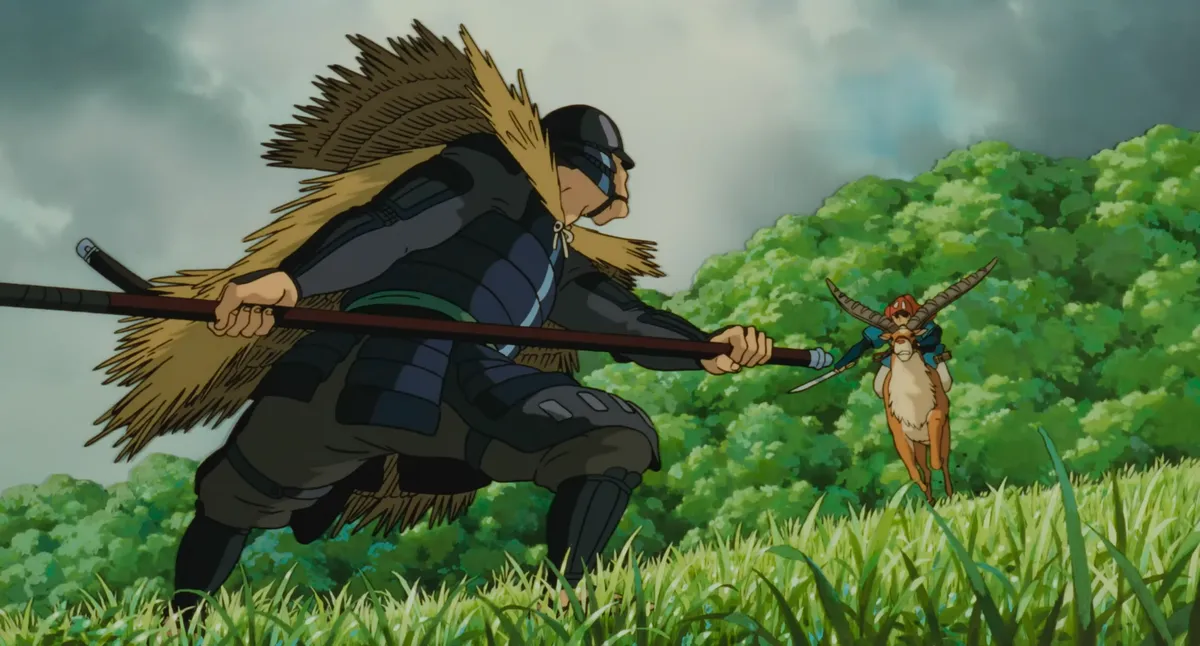
War must be, while we defend our lives against a destroyer who would devour all; but I do not love the bright sword for its sharpness, nor the arrow for its swiftness, nor the warrior for his glory. I love only that which they defend: the city of the men of Númenor; and I would have her loved for her memory, her ancientry, her beauty, and her present wisdom. Not feared, save as men may fear the dignity of a man, old and wise.
– Faramir, as written by J.R.R. Tolkien in The Lord of the Rings
Will a deal be made with Iran that lets them rebuild and create a far greater country than it ever was before, maybe one of the greatest in the Middle East or even the world? Or do I annihilate the Islamic Republic and do it quickly... Do I drive them into hell with no chance of survival and no hope of future greatness or generations?
– Donald Trump, President of the United States
Preface
I had posted this yesterday, but I took it down after 15 minutes because it felt too raw and angry. My therapist has encouraged me to post it anyway. I'm not looking for an argument so much as I'm looking for others to understand.
I.
As far as I can remember, I don't think I've gone a day in my life without at least daydreaming about making art.
When I was a kid, I made "movies" (short comedy skits) with my friends. I burned them onto DVDs forced my extended family to watch them.
In my early teens, I made little video games for 48-hour jams, but it stopped being fun when my taste in games started to outpace my skill as a designer.
In my late teens, I wrote poetry, but I started to get bored with free verse and poetic forms felt intimidating. Then COVID hit and I got depressed and lost touch with whatever writing habits I had built up.
Circa 2021, I became a product of the "listen to the Adventure Zone, watch Matt Colville, discover the GLOG" pipeline. I spent the next four or five years obsessing over how to design my own "perfect" version of Dungeons & Dragons.
My theories on "perfect" shifted constantly from one draft to the next. At first, I still wanted heroic player-characters defined by special abilities in combat. But as I picked apart Electric Bastionland and put it back together, something about the Old-School Renaissance (OSR) school of design started to click.
But it clicked in theory: on paper and in my head. Had I spent as much time designing dungeon-crawling adventures as I spent designing dungeon-crawling systems, I might have realized we are incompatible in practice years ago.
II.
Whenever I have tried to design a dungeon, I have hit this snag:
What enemies should inhabit this dungeon? It would be nice to have enemies the player-characters can choose to talk to and reason with.
Should the enemies be goblins or orcs? I'm not a fan of the implications; I'd rather just use humans with real, understandable motivations.
Should the enemies be cultists? That doesn't feel right either. Blaming everything on evil gods is why I got bored with 5E D&D in the first place.
Should the enemies be bandits? That feels like some kind of law-and-order police fantasy, unless the player-characters are criminals themselves...
Should the enemies be soldiers of some authoritarian kingdom? No, I don't want my player-characters to be terrorists unless I'm prepared to treat that subject more seriously.
Maybe I should just go back to designing systems instead of dungeons.
III.
Recently I started running a Public Access campaign as a change of pace: a game set in the real world in a real time (2004) and place (New Mexico). Public Access is about solving mysteries, not exploring dungeons. I realized that my favorite D&D campaign was more of a mystery than a dungeon-crawl.
Later, I stumbled across the Faramir quote that opened this post, and something clicked. The question started ringing in my mind: "In a default dungeon-crawl, what are the player-characters defending?" And all my secondhand ideas about dungeon-crawling started to fall out of my head like so much loose sand from a beach towel.
How much had I let myself get excited by bright swords and swift arrows without considering what right the player-characters had to use them? To use Electric Bastionland as an example: Even if you're in a mountain of debt, does that really justify murdering or manipulating people to pay it off? Is there any serious argument that "adventurers," in anything resembling a real society, could be considered anything other than criminals?
Of course, some players might be perfectly happy to be criminals, if that's the kind of story they want to tell. But that's not what attracted me to D&D in the first place. I wanted me and my friends to be heroes.
I watched Princess Mononoke for the first time recently, and what struck me was the hero Ashitaka's consistent attitude toward violence. He always warns his adversaries: he says things like, "I don't want to fight you. Stand back, or I'll shoot." Even in the face of death, he never loses sight of why he's using violence and what for. His strategy never disappears behind his tactics.
IV.
For five years, I retreated into form as a way of avoiding the problems of content. In doing so, I joined a long-established tradition: for fifty years, the entire game design world has been making essentially the same retreat.
I sometimes listen to a podcast hosted by a handful of professional video game critics with decades of experience in games journalism. I must have listened to them talk for dozens of hours at this point. I still haven't the slightest sense of what critical framework they have beyond this:
Start from your gut-level reaction to the game.
Rationalize and justify how you felt.
I don't think most game designers are working with any greater clarity. Every year, countless new digital and analog games try to recapture the promise of Dungeons & Dragons from a new angle or with the latest technology. Designers innovate without inventing; they have tactics, but no strategy.
Why has D&D dominated the creative imaginations of millions of people for a half-century at this particular moment in history? One blogger writes that dunegon-crawling "won’t go anywhere. It will even outlive us... It stays alive for 50-odd years because it’s so damn fun."
I tend to think the opposite. I think that if dungeon-crawling were destined to have any permanent significance to humanity, we would have invented it thousands of years ago, as soon as we invented dice. No, I think D&D is a product of this particular moment in history. And what is that moment?
V.
It's one thing to say "D&D is colonialist" and compare the game to what Marx called the "rosy dawn" of capitalism, "dripping... with blood and dirt." It's another thing to draw a connection to the imperialism of today and the striving of the middle classes to climb the career ladder.
I think above all, those social influences are what Dungeons & Dragons reflects. In the aftermath of the upsurge of social struggle from about 1968 to 1975, certain layers gradually accommodated themselves to capitalism, not to mention endless war waged by the United States all over the world. New forms of media, including blockbuster movies and modern games, followed suit.
I don't think "fun" arises from human psychology in a vacuum. I think "fun" is socially conditioned. Modern society's incentives get imprinted on individual psychology and we subconsciously register similar patterns in games as "fun."
And what does modern American capitalism reward above all else? I would refer you again to the second quote at the top of this post. I don't think the dungeon-crawl represents anything so much as that.